Why Your Supply Chain Still Breaks Despite Digitization Investments
Introduction
You invested in ERP, implemented dashboards, and digitized planning, yet your supply chain still breaks.
Delays continue, stockouts happen, and teams firefight daily.
Technology was supposed to solve this. It did not.
The Misdiagnosis
Many organizations assume more technology means better performance.
So they invest in ERP upgrades, planning tools, and analytics platforms.
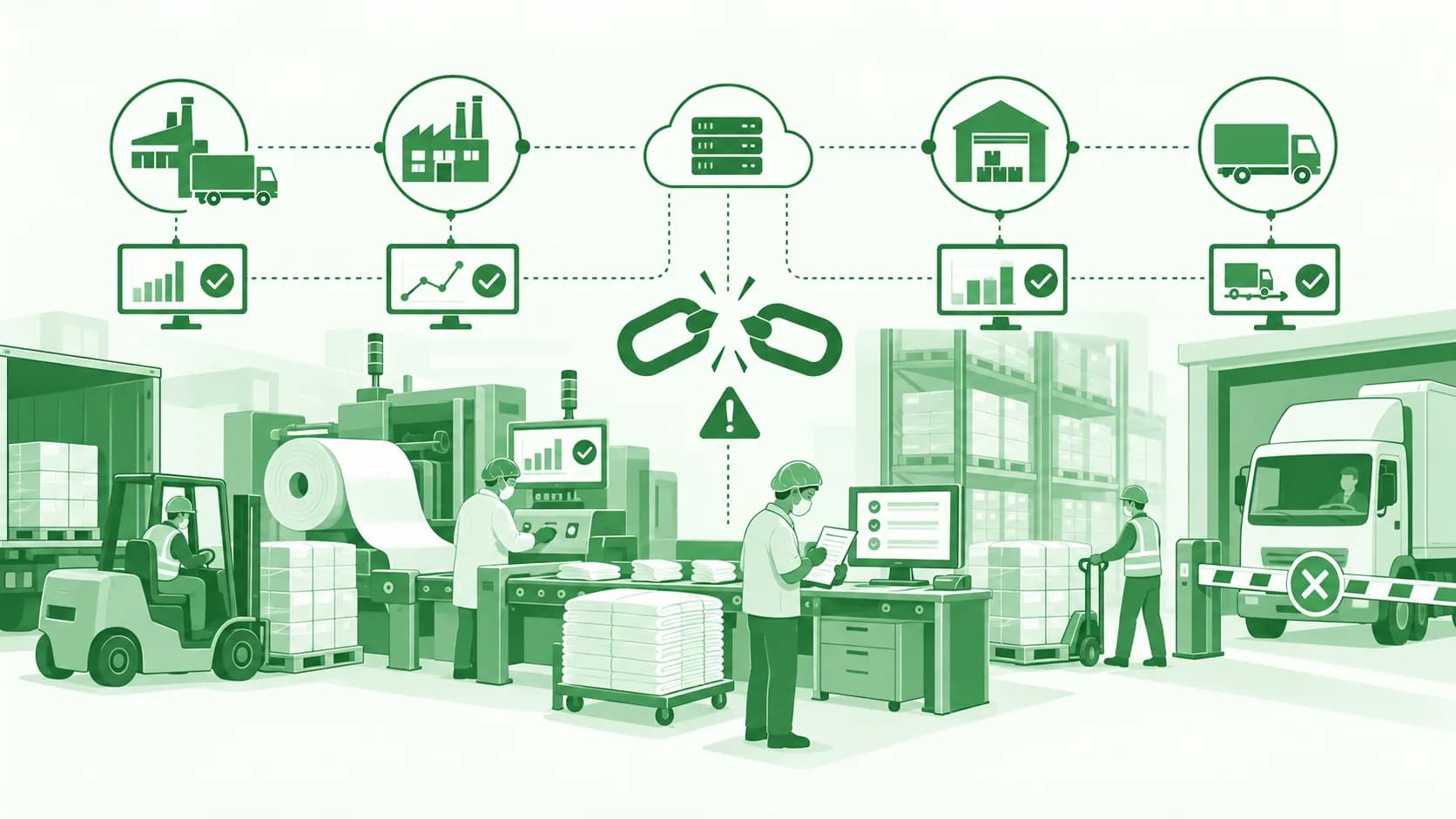
But results do not improve because the issue is often not lack of technology. It is lack of operational alignment.
The Business Impact
When digitization fails to deliver, working capital stays high, OTIF suffers, and decision-making slows due to complexity.
In many cases, organizations see less than 30% of expected impact from major system investments.
That is not a technology failure. It is an execution failure.
- High working capital due to poor planning
- Lower OTIF despite visibility tools
- Slow decisions due to fragmented systems
- Higher cost through unresolved inefficiencies
The Digital Illusion Model™
To understand this gap, evaluate four layers.
- Visibility Without Action: Data exists, but no structured response follows.
- System Complexity: Too many tools create confusion instead of clarity.
- Low Adoption: Teams bypass systems and rely on manual workarounds.
- No Gemba Linkage: System logic does not match actual shopfloor processes.
How to Apply This in Your Supply Chain
Run a practical diagnostic focused on decision speed and behaviour change.
- Are decisions being made faster after digitization?
- Do teams trust system data or cross-check manually?
- Has firefighting reduced or remained the same?
- Parallel Excel tracking alongside ERP
- Frequent overrides in planning systems
- Delays despite real-time visibility
Ground Reality: Why Technology Alone Fails
Technology works on logic. Operations work on reality.
When the two are misaligned, systems fail in execution.
On the ground, you see process steps that do not match system assumptions, delayed data entry, and team adaptations to constraints not digitally modeled.
You must digitize processes as they actually are, not as they should be.
The Pattern We See
Successful digitization follows this sequence: stabilize processes, align teams, then digitize.
Most companies reverse this sequence: digitize first, then try to fix processes.
The result is technology amplifying inefficiency instead of solving it.
Gemba Takeaway
Technology does not fix broken systems. It scales them.
If your supply chain still struggles after digitization, do not add more tools and dashboards first. Fix underlying process and execution gaps.
Real transformation does not start with systems. It starts with how work actually happens on the ground.
Facing similar gaps between strategy and execution? Let's talk: sales@gembaconcepts.com / https://gembaconcepts.com/
Key Takeaways
- 01
Technology does not fix broken systems; it scales them.
- 02
Digitization must follow process stabilization and team alignment.
- 03
Transformation starts with how work actually happens on the ground.
Continue Reading
How to Improve Production Planning and Reduce WIP in Printing & Packaging Manufacturing
Printed sheets waiting for lamination, laminated reels waiting for slitting, die-cut blanks waiting for gluing. Everything's moving. Nothing's finishing.
How to Prevent Raw Material Shortages and Production Delays in Printing & Packaging Manufacturing
The press is ready. The job is scheduled. The customer is waiting — and the board hasn't arrived. What looks like a raw material shortage is often a visibility or planning problem in disguise.
How to Reduce Scrap, Material Waste and Rework in Personal Hygiene Manufacturing
Nonwoven trimmings. SAP overshoot. Wet wipes rejected for saturation variance. Every one is material that was paid for, processed, sometimes packed, and then written off.
Industrial Businesses Across 3 Continents