How to Reduce Scrap, Material Waste and Rework in Personal Hygiene Manufacturing
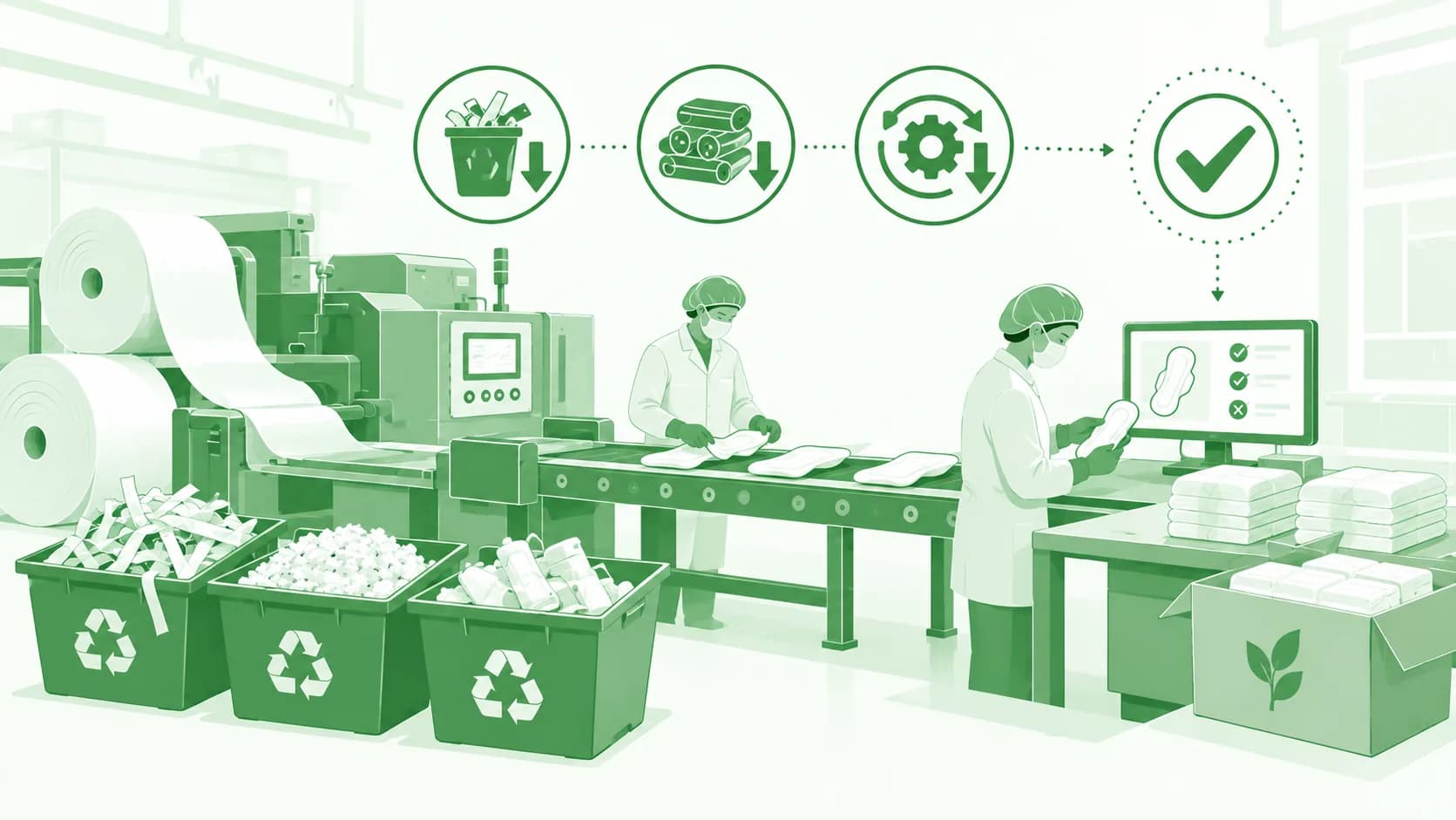
The Three Cost Buckets Nobody Adds Up
Scrap in personal hygiene manufacturing shows up in nonwoven trimmings from sanitary pad lines, superabsorbent polymer overshoot on diapers, wet wipes rejected for saturation variance, handwash bottles pulled for cap torque, and lotion batches held for viscosity. Reducing it takes specific counter-measures designed on the production floor, not in a boardroom.
- Raw material scrap — nonwoven and film edge trim, SAP dosing overshoot, fragrance line flush, ink and adhesive over-application, typically 3-8% of BOM value
- Rework and WIP loss — sanitary pads with poor sealing, wet wipes with wrong count, sanitizer bottles under fill weight
- Changeover and cleaning waste — every SKU switch costs a first-piece run; unplanned cleaning cycles in fragrance-heavy categories can consume half a shift
Why Personal Hygiene Manufacturing Struggles Here Specifically
Combined, these buckets typically run 6-12% of manufacturing cost without appearing as a single P&L line. SKU complexity increases changeovers and rejection rates. Materials have narrow tolerance windows and high per-kilo costs. High line speeds amplify the impact of setting drifts into larger rejection numbers.
The 4M Lens Applied on the Floor
Every scrap and waste problem falls within Man, Machine, Material or Method.
- Man — operator standard work for changeover, cleaning and first-piece checks; training that survives shift handovers
- Machine — SMED to reduce changeover time (30-50% typical reduction); autonomous maintenance enabling operators to catch drift before rework occurs
- Material — supplier quality gates at goods receipt, FIFO discipline in stores, humidity and temperature control for SAP and adhesives
- Method — poka-yoke on the line (weight checks, vision inspection, seal integrity), single-piece flow where applicable, first-piece OK sign-off before every run
Where to Start — The Highest-Return Moves
Four priority moves yield the fastest returns.
- SMED on the top three changeover routines (40-60% time reduction and proportional first-piece scrap drop)
- Standardized cleaning cycles between fragrance and colour SKU switches
- Daily first-hour meeting at the line reviewing the previous 24 hours' rejections
- Visible reject board with categories and counter-measures owned by operators
Try It on Your Own Numbers
Manufacturers applying these disciplines consistently achieve 20 to 35 percent scrap reduction within six months, with each kilogram of scrap saved translating into throughput regained.

Written by Mohit Bafna
Co-Founder, Gemba Concepts
Want This Fixed in Your Plant?
Schedule a Free ConsultationKey Takeaways
- 01
Scrap hides in three buckets — raw material scrap, rework/WIP loss, and changeover/cleaning waste — accounting for 6-12% of manufacturing cost without appearing as a single line item.
- 02
SKU complexity, unforgiving materials and fast line speeds increase waste per changeover and drift compared with most other industries.
- 03
Every scrap problem stems from Man, Machine, Material or Method factors; fixing the wrong factor stalls improvement initiatives.
- 04
Plants implementing SMED on top changeovers, standardizing cleaning cycles and running a daily first-hour rejection meeting typically see 20-35% scrap reduction within six months.
Frequently asked questions
Continue Reading
Inventory Management in Personal Hygiene Manufacturing: How to Reduce Shortages, Excess Stock and Production Delays
Sanitary pads short while adult diaper cartons block the aisles. Handwash pumps missing while lotion caps arrive in triplicate. The pattern is familiar — the costs are not always visible.
How to Improve Production Planning and Reduce WIP in Printing & Packaging Manufacturing
Printed sheets waiting for lamination, laminated reels waiting for slitting, die-cut blanks waiting for gluing. Everything's moving. Nothing's finishing.
How to Prevent Raw Material Shortages and Production Delays in Printing & Packaging Manufacturing
The press is ready. The job is scheduled. The customer is waiting — and the board hasn't arrived. What looks like a raw material shortage is often a visibility or planning problem in disguise.
Industrial Businesses Across 3 Continents