You Don't Have a Cost Problem.You Have a Flow Problem.
Introduction
Costs are rising and margins are under pressure. You respond with cost-cutting, but nothing fundamentally changes.
Because the real problem is often not cost. It is flow.
The Misdiagnosis
Most organizations treat cost as a financial issue and act through vendor negotiations, expense reductions, and budget controls.
These actions create temporary savings, not sustainable improvement.
Cost is not created in finance first. It is created in operations.
The Business Impact
Flow inefficiencies silently inflate cost across the system.
In many plants, only 40-50% of total time is value-adding. The rest is waste, and that waste is the real cost driver.
- 10-25% productivity loss due to waiting and idle time
- 15-30% excess inventory due to overproduction
- 5-10% revenue loss due to delayed deliveries
- 8-12% increase in cost per unit due to inefficiencies
The Flow Loss Model™
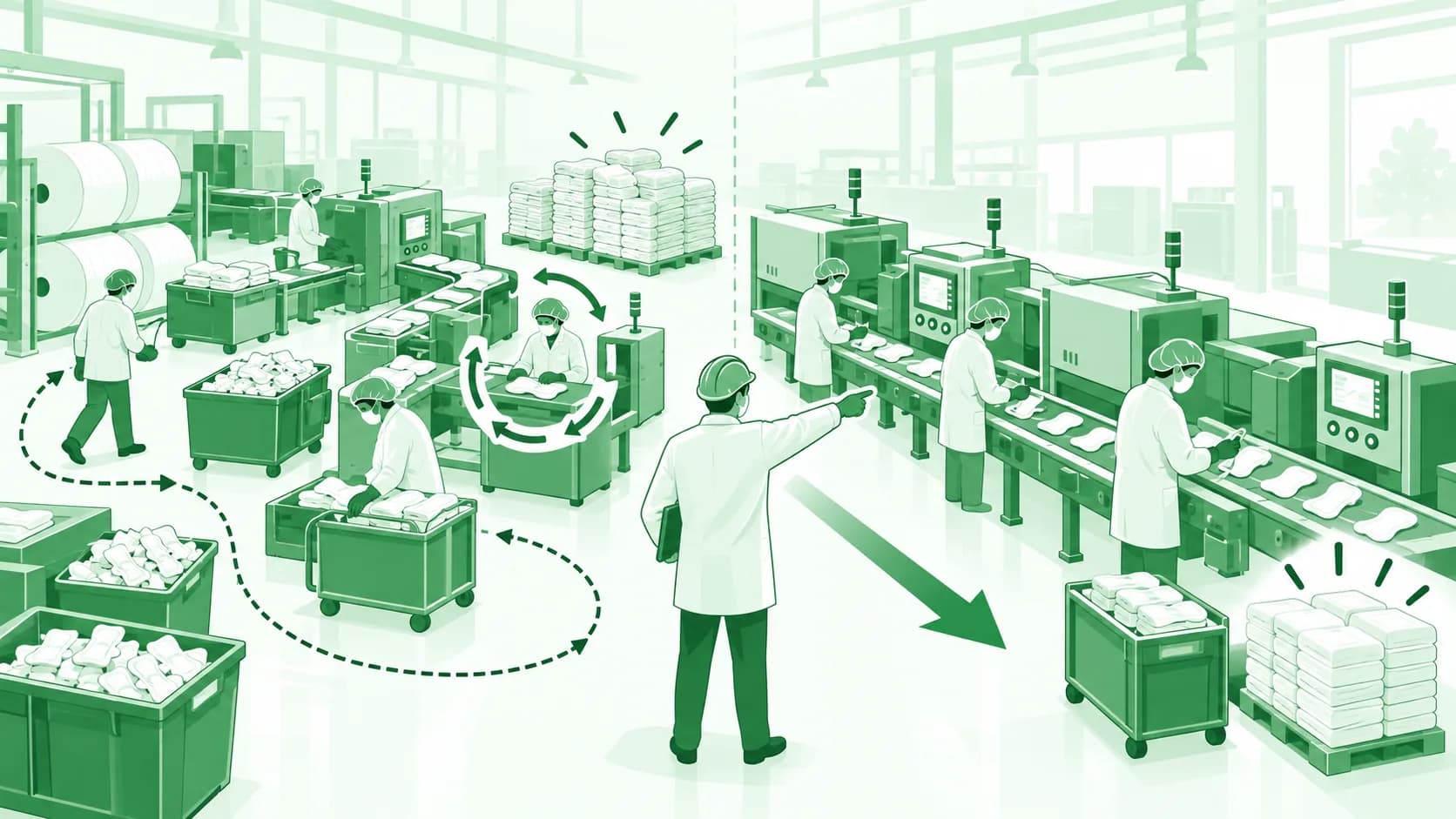
To understand cost, understand flow first.
- Waiting Time Loss: Machines, materials, or people waiting for the next step.
- Movement Waste: Unnecessary transport of materials across the facility.
- Rework and Quality Loss: Defects create repetition and extra effort.
- Overproduction Loss: Producing more than required, increasing inventory and blocking cash.
How to Apply This Practically
Start with one product flow from raw material to dispatch.
Measure lead time vs processing time, WIP at each stage, and delay between operations.
You will typically find that only 5-10% of total time is actual value creation.
- Where does the product wait?
- How many times is it moved unnecessarily?
- How often is work repeated?
Ground Reality: Where Cost Is Actually Created
Cost does not increase in one big event. It accumulates through repeated micro-inefficiencies.
Ten minutes of waiting, extra handling, and minor quality issues, repeated across processes, shifts, and days, create major cost escalation.
From the shopfloor, you can see where flow stops, where effort increases, and where waste builds.
The Pattern We See
Organizations focused on cost-cutting often reduce expenses temporarily but face recurring cost pressure.
Organizations focused on flow reduce waste structurally and improve productivity sustainably.
The difference is focus.
Gemba Takeaway
Cost is a symptom. Flow is the cause.
If you keep attacking cost directly, gains remain short-term and inefficiencies return.
If you fix flow, productivity improves, inventory reduces, and costs decline naturally.
The most effective cost reduction strategy is not cutting cost. It is eliminating flow inefficiencies.
Facing similar gaps between strategy and execution? Let's talk: sales@gembaconcepts.com / https://gembaconcepts.com/
Key Takeaways
- 01
Cost is often the symptom; flow is the cause.
- 02
Most cost inflation accumulates through repeated micro-losses on the shopfloor.
- 03
The strongest cost strategy is eliminating flow inefficiencies.
Continue Reading
How to Improve Production Planning and Reduce WIP in Printing & Packaging Manufacturing
Printed sheets waiting for lamination, laminated reels waiting for slitting, die-cut blanks waiting for gluing. Everything's moving. Nothing's finishing.
How to Prevent Raw Material Shortages and Production Delays in Printing & Packaging Manufacturing
The press is ready. The job is scheduled. The customer is waiting — and the board hasn't arrived. What looks like a raw material shortage is often a visibility or planning problem in disguise.
How to Reduce Scrap, Material Waste and Rework in Personal Hygiene Manufacturing
Nonwoven trimmings. SAP overshoot. Wet wipes rejected for saturation variance. Every one is material that was paid for, processed, sometimes packed, and then written off.
Industrial Businesses Across 3 Continents