Is a Layout Problem the Right Time to Call a Manufacturing Plant Consultant?
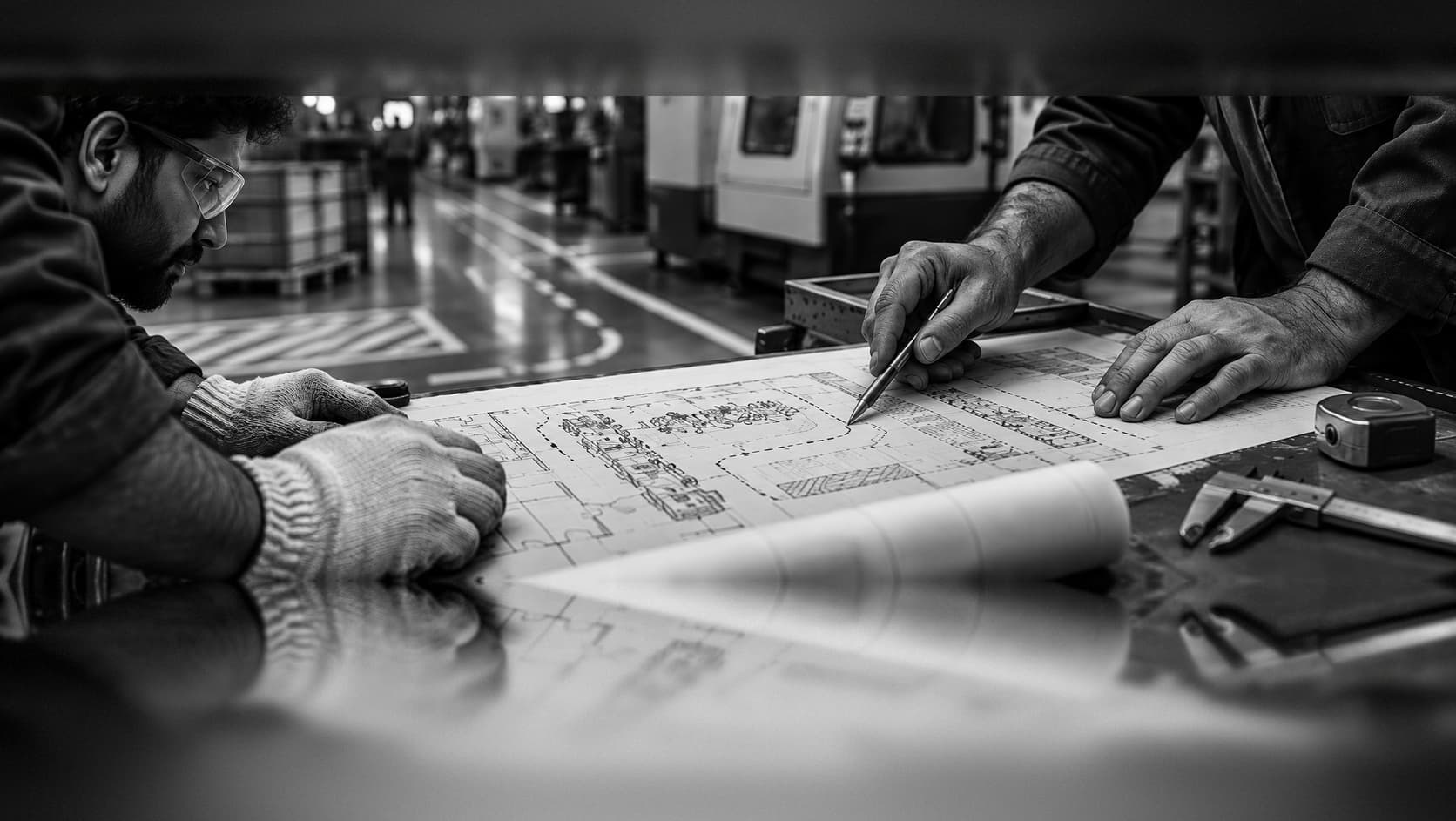
Plant layout questions have a way of arriving at the wrong moment. A new product line has been promised to a customer, a quality audit has flagged mixing paths, or a near-miss on the floor has forced a safety review. At that point someone usually asks whether it is time to bring in a manufacturing plant consultant. Sometimes the answer is yes. Often the real problem is upstream of the layout, and a redesign would lock it in with new walls.
Here is a practical way to decide:
The signals
When a layout problem is really a layout problem
A layout change is justified when the fix cannot be made inside the current geometry. Material crossing its own path. Finished goods pushed through the same corridor as raw receipts. A new line that physically does not fit without moving an existing one. Egress routes blocked by racking added over time. Safety separations that current manufacturing plant layout does not allow for. These are structural issues, not habit issues, and they do not go away with better scheduling.
Rule out first
Process problems that look like layout problems
Before any layout design for manufacturing plant work begins, rule out three things. First, scheduling — if two lines fight for the same forklift at shift change, better sequencing may help more than new bays. Second, WIP — if work-in-progress is piled everywhere, cutting batch size often releases the space the team thought it needed. Third, storage discipline — if the fastest-moving SKUs sit furthest from dispatch, an ABC-by-movement exercise usually recovers useful floor area without moving a wall.
Doing the layout before the process work tends to make the new layout obsolete the day it is signed off.
The engagement
What a manufacturing plant consultant actually does
A good engagement starts with a walk of the current site, cycle-time measurements at each station, and a map of material and operator movement. Then comes an options exercise — usually three to five layout alternatives — scored against output, flow, safety, flexibility and cost to implement. The consultant walks the options through plant leadership, picks one, and drafts phased implementation plans. Larger plant design services engagements will also include utilities, racking and conveyor specifications.
What a good consultant will not do is hand you a single design, delivered without alternatives, before they have spent time with your operators.
Capex discipline
Why the cheapest layout change is the one you do not do
Many plants find that half of what they thought needed a redesign can be fixed by rearranging the current layout — moving a station, changing the direction a conveyor loads, swapping the location of a tool crib. The other half is genuine structural work. Keeping the two separate protects your capex budget and your production schedule during the change.
Want This Fixed in Your Plant?
Gemba Concepts does plant layout and process engineering work across manufacturing, grounding every redesign in shop-floor data. A short walkthrough is a sensible first step.
Book a short walkthroughFrequently asked questions
Continue Reading
How to Choose a Business Consulting Firm for a Manufacturing Company
A plant director in the middle of a bad quarter gets the same advice from every direction. Hire a consultant. Install new software. Restructure the team.
What Does an Operational Excellence Consultant Check First on the Shop Floor?
An Operational Excellence Consultant walking into your plant for the first time usually spends their opening day doing something that surprises people. They watch.
What Does a Supply Chain Consultant Do in a Manufacturing Business?
When a plant head says 'our supply chain is a mess,' the words cover a lot of different problems. Materials arriving late. Forecasts nobody trusts. Stock everywhere but nothing on the line.
Industrial Businesses Across 3 Continents