Industry 4.0 and the Smart Factory: Technologies, Benefits and Where They Actually Apply
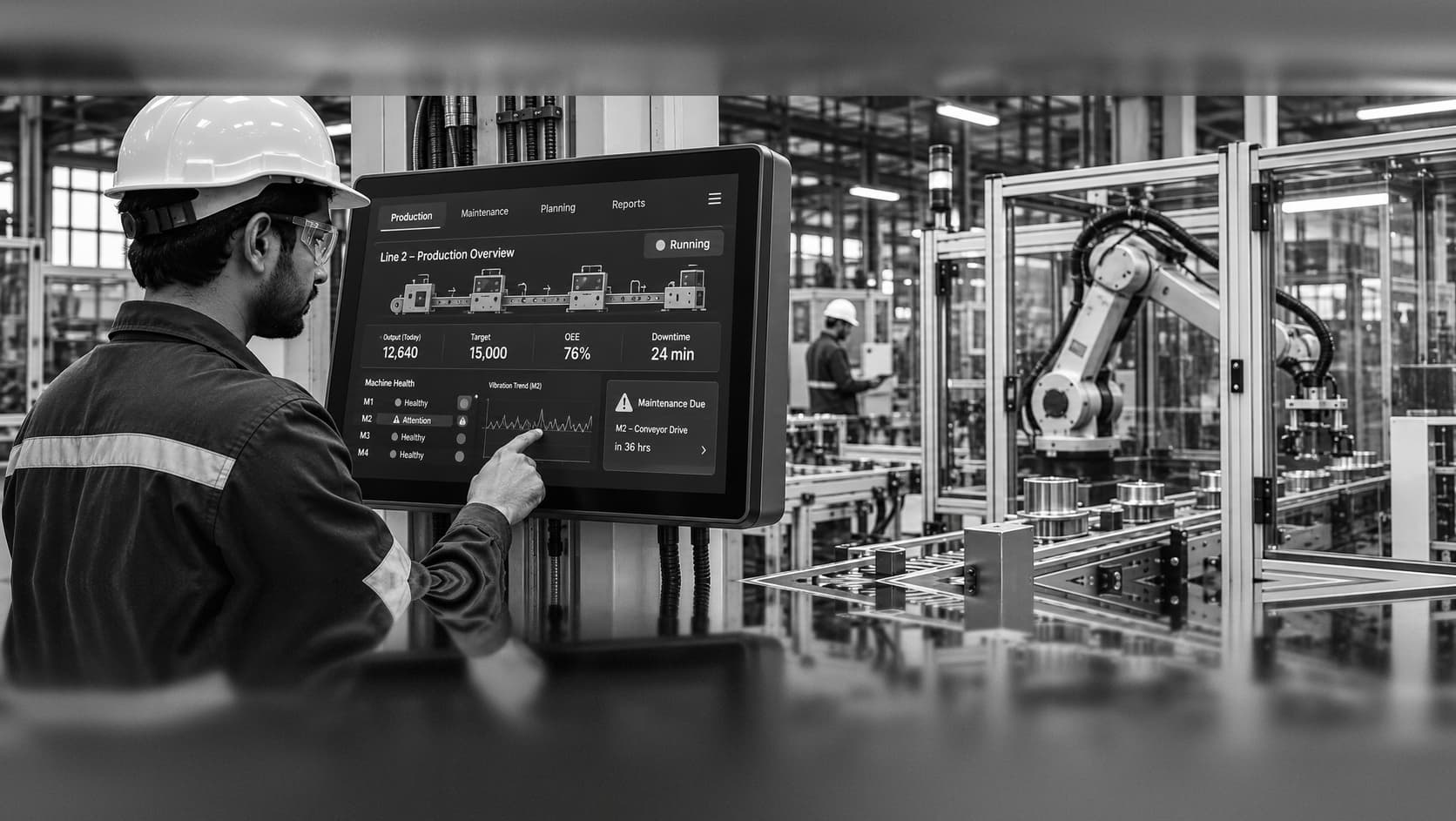
Walk into a plant that is three years into an Industry 4.0 journey and you will usually find three things — a data layer most operators cannot read, a dashboard the plant head rarely looks at, and one or two genuinely useful changes that have paid back the rest. A smart factory is a useful idea. It is also one of the most oversold in manufacturing. This piece is a short, honest view of what works, what does not, and where a plant should start.
What Industry 4.0 actually means on a shop floor
At the plant level, Industry 4.0 is a shorthand for connected machines, shared data, and faster decisions. A sensor on a bearing that logs vibration. An MES that knows what each line is doing right now. A planning tool that updates when a machine stops. The individual pieces are not new. Putting them together so a shift supervisor can act on them in the same morning is the part that is.
The technologies that matter most
Five layers carry most of the value. One, sensors on machines — vibration, temperature, current, pressure. Two, a data layer that gets those readings off the machine and into a shared place. Three, a reporting layer that turns readings into useful signals. Four, planning and maintenance systems that use the signals to schedule work. Five, the daily rhythm that makes someone act on them. Smart manufacturing technologies that skip the last two deliver less than they promise, because the data stays unread.
Benefits that show up first
In most plants, the earliest payback comes from the maintenance side. A condition signal on a critical asset catches a failure before it stops the line. A Maintenance Tracking System fed by live machine data closes the gap between a technician's hunch and the record. Smart manufacturing systems that start here — one asset class, one signal, one response — build more momentum than broader rollouts because the outcome is visible within weeks.
Other gains follow. Shorter planning cycles when the plan can update against real capacity. Less scrap when a drift is caught at the station. Faster on-time delivery when dispatch sees what is actually leaving the line.
Where preventive maintenance fits
Preventive maintenance is often the quickest Industry 4.0 win because the data story is simple. A preventive maintenance software for manufacturing that sits beside a PM calendar and reads machine condition signals can move work from scheduled (every 500 hours, say) to condition-based (when vibration crosses a threshold). A preventive maintenance tracker tied to the condition signal is how you turn an idea on a slide into a scheduled technician visit.
A sensible first project
Pick one critical asset or line. Add two or three sensors. Build the data pipe into one existing system — the CMMS is usually the right choice. Agree what triggers a technician visit. Run it for one quarter. Measure the hours of unplanned downtime avoided and the PMs rescheduled against the condition. Intelligent manufacturing grows one proven loop at a time. Nothing about the bigger vision benefits from a bigger first project.
Want This Fixed in Your Plant?
Gemba Concepts works on Industry 4.0 projects where the goal is a measurable loop, not a dashboard. A short walkthrough of your current maintenance and data setup is a sensible first step.
Track maintenance from anywhere - download the app free on iOS and Android.
Frequently asked questions
Continue Reading
Production Cost Software: Are You Tracking More Than Raw Material Costs?
Most manufacturers can tell you what their raw material cost per unit is. Far fewer can tell you what each unit actually cost to produce last month.
How WMS Software Helps Manufacturers Keep Track of Material Movement?
In a working manufacturing plant, materials move dozens of times before they become a finished unit. Every one of those moves is a chance for the record and the floor to drift apart.
Your ERP Isn't Broken. Your Execution Layer Is.
Your ERP shows 92% order fulfilment accuracy. Your customers experience 78% OTIF. That 14% gap is not a reporting issue — it is lost revenue, penalties, and credibility erosion.
Industrial Businesses Across 3 Continents