The Truck Was Ready. The Tiles Were Ready. But It Was Still Waiting.
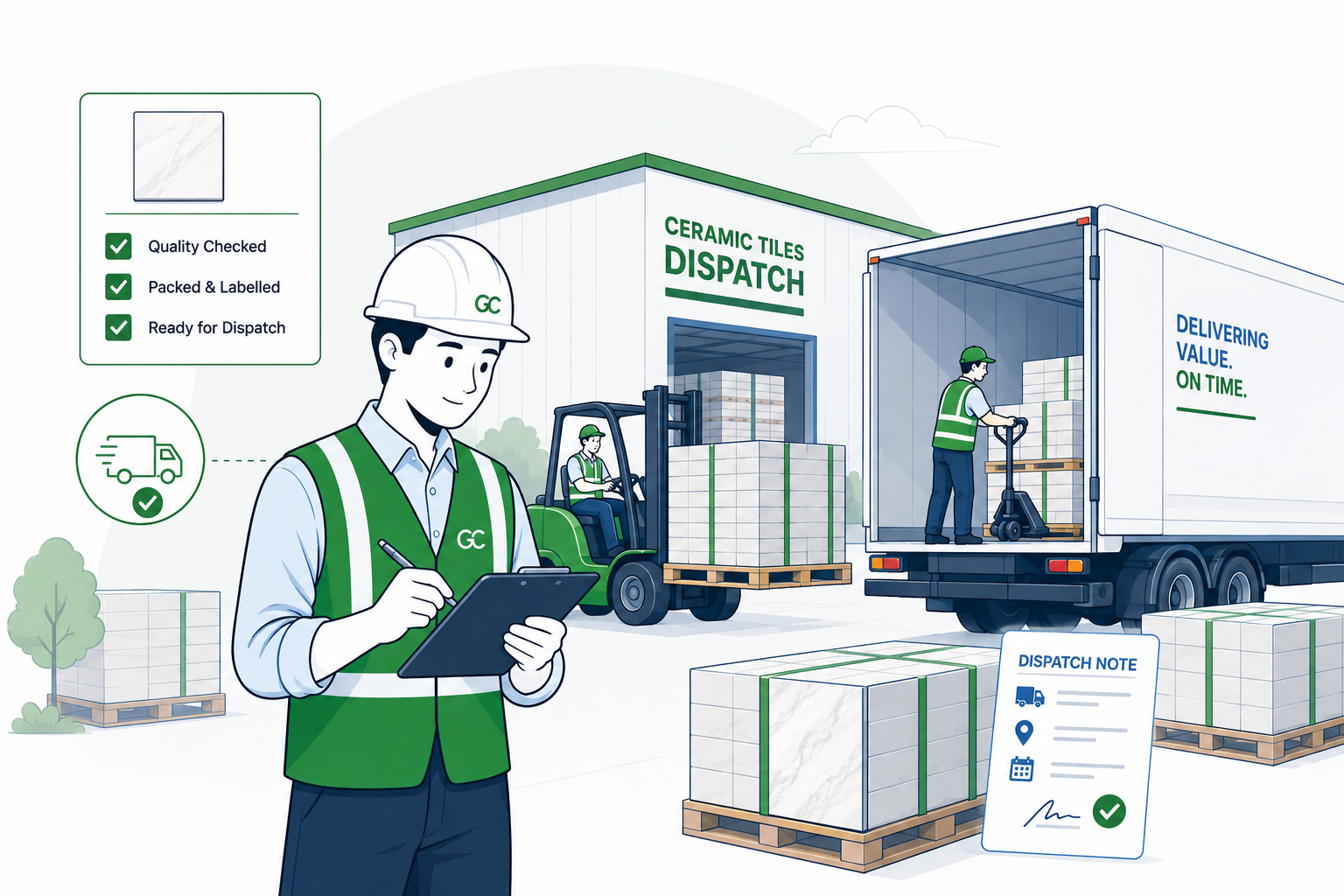
A truck arrived at a tile manufacturing plant to collect a customer order.
The driver was ready. The tiles were ready. But the truck was waiting.
The delay could be at the gate, during material preparation, while checking the correct SKU, shade or calibre, or because pallets were not yet staged.
One delay may seem small. But repeated across many trucks, it becomes a real business problem.
The manufacturer wanted to reduce truck turnaround time without simply adding more people or equipment.
So the team looked at the complete truck journey.
Where Was the Time Going?
The team followed the truck from gate-in to gate-out.
There was no single big bottleneck. Several small delays were adding up.
Material was sometimes not ready when the truck arrived. Loading space could be busy. Pallets might not be staged. Documents could still be under preparation.
The problem was not the truck. The problem was the process around the truck.
This is a common challenge for ceramic manufacturers, where production, warehouse, dispatch and transport teams must work together closely.
Better Dispatch Planning Starts Before Arrival
The manufacturer focused on improving the existing process instead of immediately adding resources.
- Truck scheduling
- Dispatch planning
- Material readiness
- Pallet staging
- Loading coordination
- Gate-in/gate-out flow
- Dispatch visibility
What This Means at the Loading Bay
The goal was simple:
When the truck arrives, the right material, documents, people and loading space should be ready.
For ceramic tiles manufacturing, this is especially important when orders involve different SKUs, shades, calibres and pallet requirements.
Material Readiness Matters
A truck cannot leave if the material is not ready.
For a tile manufacturer, material readiness can mean having the correct SKU, shade, calibre, quantity and pallets ready before loading begins.
If one part is missing, the truck waits.
Material traceability software can help teams understand where material is located and how it is moving through the process.
Existing ERP software can also provide order and inventory information that supports better dispatch planning.
But technology is not the first step.
First fix the process. Then use technology to manage it better.
Better Visibility, Less Waiting
A busy dispatch yard becomes difficult to manage when teams depend on calls and manual updates.
Teams need to know:
- Which trucks are expected?
- Which trucks have arrived?
- Which truck is waiting?
- Which truck is being loaded?
- Which truck has completed dispatch?
Where Dispatch Tracking Software Helps
Dispatch tracking software can help provide this visibility.
A Transportation Management System (TMS) can also support truck scheduling, vehicle arrivals and dispatch status.
The purpose is simple: help teams see problems early instead of reacting after the truck has already started waiting.
Measure the Truck Journey
To improve truck turnaround time, first measure it.
Track:
Gate-In → Waiting → Material Readiness → Staging → Loading → Documentation → Gate-Out
Then find where the most time is being lost.
If material is late, improve preparation.
If loading space is causing delays, review scheduling.
If pallets are not ready, improve staging.
If documents are slow, prepare them earlier.
Fix the reason for the waiting, not just the waiting itself.
The Result: 50% Lower Truck Turnaround Time
The result was clear.
Truck turnaround time was reduced by 50%.
The improvement did not come from making only one activity faster.
The complete dispatch flow improved.
The gate team knew what was coming. The warehouse knew what needed to be ready. The dispatch team knew which truck needed attention.
The truck spent less time waiting and more time moving.
For tile manufacturers, this shows why better coordination can be more valuable than simply adding more resources.
What Tile Manufacturers Can Learn
Long truck waiting times do not always mean the factory needs more people, equipment or yard space.
The cause may be:
- Poor truck scheduling
- Late material readiness
- SKU, shade or calibre checks
- Pallet staging delays
- Loading coordination
- Documentation delays
- Poor communication
- Limited yard visibility
Final Takeaway
Start by finding the delay. Then fix the cause.
A few minutes of waiting may not look important.
But when the same delay happens across many trucks, those minutes become hours.
For tile manufacturers and ceramic manufacturers, the answer is not always more resources.
Find the delay. Fix the cause. Measure the result.
The truck was not the problem. The process around the truck was.
Want to Reduce Truck Waiting Time in Your Ceramic Plant?
If your tile factory is facing long truck waiting times, dispatch delays or poor yard visibility, Gemba Concepts can help identify where time is being lost and improve your dispatch process.
Key Takeaways
- Long truck waiting times were affecting dispatch flow.
- Delays were linked to gate entry, material readiness, loading and documentation.
- SKU, shade, calibre and pallet staging added to the waiting.
- Better dispatch coordination improved the overall flow.
- Truck turnaround time was reduced by 50%.
Frequently asked questions
What is truck turnaround time?
Truck turnaround time is the total time a truck spends inside a plant, from gate-in to gate-out.
Why is truck turnaround time important for tile manufacturers?
Long turnaround times can increase yard congestion, delay deliveries, raise transport costs and reduce vehicle utilisation.
What causes long truck waiting times?
Common causes include material delays, SKU or order issues, shade and calibre checks, pallet staging, loading congestion, paperwork and poor coordination.
How can tile manufacturers reduce truck turnaround time?
Better truck scheduling, material readiness, dispatch planning, loading coordination and yard visibility can help reduce unnecessary waiting.
Can dispatch tracking software help?
Yes. It can help teams track truck schedules, arrivals, loading status and dispatch progress.
Contact Gemba Concepts
Need Help Solving Similar Execution Gaps?
Connect with our consulting team to discuss your current operational challenge and the outcomes you want to achieve.
Bengaluru
Ram Leo, 59/4, Market Rd, Basavanagudi, Karnataka 560004
Ahmedabad
World Trade Tower, Near Sarkhej Sanand Cross Road, Gujarat 380051
Share This Article
Found this useful? Share it with your team and peers.