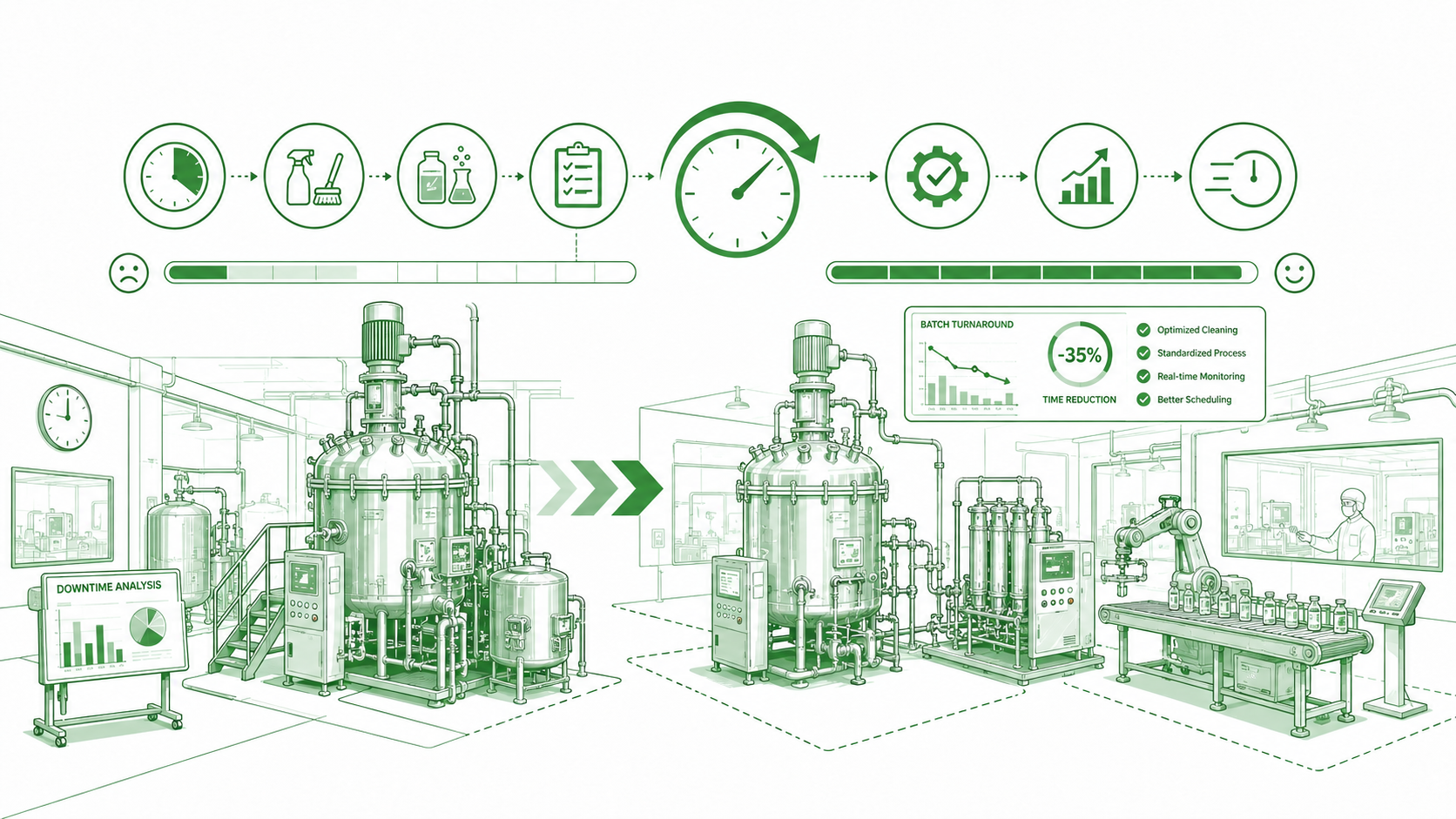
A Batch Is Finished. So Why Isn't the Next One Starting?
The previous batch is complete. The equipment is ready, but the next batch has not started yet.
Production is waiting for cleaning. Stores are preparing materials. Quality is waiting for a check. Maintenance is being called to confirm equipment readiness.
No single delay looks serious. Together, these small gaps can consume valuable production hours.
For pharmaceutical manufacturers, reducing this time between batches can create more usable capacity without simply asking people to work faster. A Pharma Consultant can help the plant find where these delays occur and turn them into measurable improvements.
Why Batch-to-Batch Production Time Matters
Every hour between two batches is time when equipment is not producing.
Long gaps can result in:
The answer is not always to make cleaning, setup or documentation faster.
The better question is: Which activities must happen, and where can unnecessary waiting be removed?
A faster process is not useful if it creates quality, safety or compliance risks. The aim is to remove avoidable delays while keeping required controls in place.
- Lost production hours
- Lower equipment utilisation
- Delayed production schedules
- More waiting for operators and support teams
- Greater pressure on production planning
- Delayed customer orders and dispatch
Where Time Is Lost Between Two Pharma Batches
The gap between two batches usually involves several connected activities:
These activities are often handled by different teams.
Production may be ready while materials are still being prepared. Materials may be ready while equipment is being cleaned. Equipment may be ready while the next step is waiting for clearance.
This is why pharmaceutical manufacturing consulting should look at the complete flow rather than focusing on one department alone.
A Pharma Consultant can observe these handoffs directly and identify where the process is losing time.
- Batch completion and line clearance
- Equipment cleaning
- Product changeover and setup
- Raw material availability
- Packaging material readiness
- Documentation and record completion
- Quality checks and approvals
- Operator availability
- Equipment and utility readiness
- Material movement from stores to production
Batch-to-Batch Time vs. Changeover Time: What Is the Difference?
These two terms are related, but they are not the same.
Batch-to-batch production time is the complete time between the end of one batch and the start of the next batch.
Changeover time is the time needed to switch equipment or a production line from one product, format or batch setup to another.
For example, a plant may take 180 minutes between two batches. Cleaning may take 60 minutes and changeover 45 minutes. The remaining time may be made up of material waiting, documentation, approvals or other handoffs.
This distinction matters because reducing changeover time alone may not reduce the total batch-to-batch gap.
The plant needs to understand where the entire 180 minutes is going.
Map the Complete Batch-to-Batch Flow
A simple process map can make hidden delays easier to see:
Batch Completion → Cleaning → Line Clearance → Changeover → Material Readiness → Equipment Readiness → Quality Clearance → Next Batch Start
Instead of looking only at how long each task takes, study:
The aim is to understand the sequence and the handoffs.
For example, if materials can be safely prepared while the previous batch is still running, there may be no reason to wait until the equipment stops.
- When the activity starts
- When it finishes
- What it is waiting for
- Which team owns it
- Whether another activity could happen at the same time
How to Measure the Current Batch-to-Batch Time
Start with one clear definition and use it consistently.
Record the time from completion of one batch to the start of the next batch.
Then break that time into individual activities and delays.
Compare planned time with actual time.
This helps answer three basic questions: Where are we losing time? Why are we losing it? Does the same delay keep happening?
Without this information, teams may spend time fixing the most visible problem instead of the biggest one.
- Product
- Batch
- Equipment
- Shift
- Activity
- Department
- Delay reason
Key Metrics Pharma Plants Should Track
These metrics give pharmaceutical consultants a practical view of where production time is being lost.
- Batch-to-batch time: Total time between two production batches.
- Cleaning time: Time required to clean and prepare equipment.
- Changeover time: Time required to switch the equipment setup.
- Waiting time: Delays caused by unavailable materials, people, approvals or equipment.
- Equipment utilisation: How effectively equipment time is being used.
- Batch cycle time: Total time required to complete a batch.
- First-pass yield: Batches completed correctly without rework.
- Planned vs. actual production time: Difference between scheduled and actual production time.
7 Practical Ways to Reduce Batch-to-Batch Production Time
- Prepare Before the Previous Batch Ends: Do not wait for one batch to finish before preparing everything for the next one. Where procedures allow, prepare required materials, documents, tools and other items in advance. The goal is simple: make the next batch ready while the current batch is still running. This can reduce avoidable waiting without changing the required production controls.
- Separate Internal and External Activities: Identify activities that require the equipment to be stopped and those that can be prepared while it is still running. This is a key principle of SMED - Single-Minute Exchange of Die. In practice, the idea is simple: move suitable preparation work outside the equipment stoppage period wherever the process and quality requirements allow it. For a pharma plant, this should never mean skipping cleaning, checks or approvals. It means finding preparation work that can be completed safely before the equipment needs to stop.
- Standardise Cleaning and Changeover: Different shifts should not follow completely different methods. Create clear standard work for cleaning steps, equipment setup, tool changes, material changes, line clearance, and required checks. A standard method reduces variation and makes it easier to see when a delay is caused by the process rather than by normal work.
- Make Materials Ready in Advance: Production should not be waiting for stores after the equipment is ready. Before the previous batch ends, confirm the availability of raw materials, packaging materials, tools, required documents, and other approved production inputs. Clear ownership between stores, planning and production can prevent simple handoff delays.
- Check Equipment Readiness Early: A small equipment issue can become a major schedule problem when it is found at the last minute. Where appropriate, check equipment condition, utilities, tools and setup requirements before the next batch is due. This gives maintenance and production teams time to respond before the equipment becomes the bottleneck.
- Coordinate People Around the Batch: Batch preparation may involve production, quality, stores, maintenance and planning. Everyone should know what needs to be done, who owns the activity, when it must be completed, and what happens next. Clear ownership reduces the common "I thought someone else was doing it" problem.
- Capture and Standardise the Best Method: Once the plant finds a better way of working, document it. Train the relevant teams and check whether the new method is followed consistently across shifts. An improvement that works only on one shift is not yet a stable improvement.
How Lean Methods Can Reduce Batch Delays
Lean methods are useful when they solve a real production problem.
Value Stream Mapping helps teams see the complete flow from one batch to the next.
SMED helps reduce setup and changeover time by moving suitable preparation work outside the equipment stoppage period.
Standard Work makes the best known method repeatable.
Root Cause Analysis helps find why the same delay keeps returning.
Time and Motion Study can reveal unnecessary movement, handoffs and waiting.
Daily Management helps teams check whether improvements are being sustained.
The purpose is not to use Lean terms for the sake of using them. The purpose is to remove avoidable time from the production process.
How a Pharma Consultant Can Help
A Pharma Consultant can study what actually happens on the shop floor rather than relying only on reports.
Experienced pharma industry consultants can also help connect production, quality, maintenance, stores and planning so that a delay in one area does not unnecessarily stop the next activity.
The review may include:
- Mapping the complete batch flow
- Measuring batch-to-batch time
- Studying cleaning and changeovers
- Checking material readiness
- Reviewing equipment readiness
- Understanding manpower coordination
- Finding repeated waiting points
- Identifying bottlenecks
- Standardising improved methods
When Should a Pharma Manufacturer Seek External Support?
External support can be useful when:
In these situations, pharma consultancy can provide an independent view of the process.
Good pharmaceutical consulting should lead to measurable improvements, not simply another report.
- Batch-to-batch time remains high
- Different shifts show large time differences
- Changeovers are inconsistent
- Equipment frequently waits for support teams
- Production schedules are repeatedly missed
- Teams know there is a delay but cannot identify the main cause
Use Data to Find the Biggest Time Loss
Not every delay deserves the same attention.
Track delays by: Product → Batch → Equipment → Shift → Activity → Department → Reason.
Then use a simple Pareto analysis to identify the few causes responsible for the largest share of lost time.
For example, if material waiting appears repeatedly across several products, fixing that handoff may create more value than spending weeks trying to reduce a smaller setup activity.
The data tells the team where to look first.
Technology Can Improve Visibility
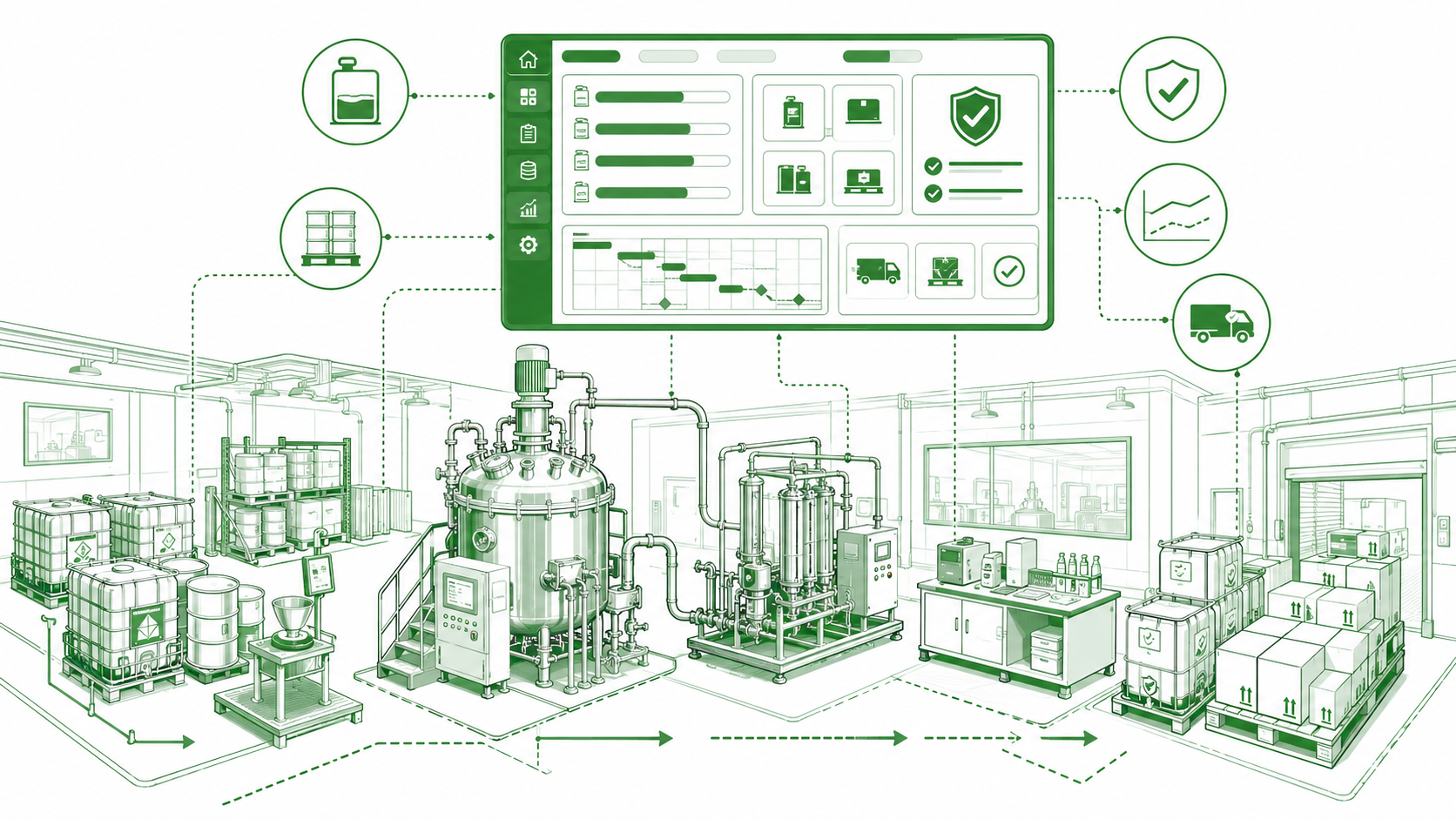
Modern pharma manufacturing software can help teams track:
This can make delays easier to see and help teams act sooner.
But technology does not automatically remove the cause of a delay.
For example, software may show that a batch started three hours late. The team still needs to determine whether the cause was cleaning, material availability, equipment readiness, quality clearance or manpower.
For a related view of how digital systems can improve plant visibility, read: How Pharma Manufacturers Can Get Real-Time Visibility with ERP Software.
Technology provides visibility. Process improvement addresses the cause.
- Batch status
- Production progress
- Equipment status
- Material availability
- Quality status
- Production timelines
- Planned vs. actual performance
Simple Batch-to-Batch Time Reduction Checklist
Ask these questions during your next production review:
If the answers are unclear, start by measuring the process before changing it.
- Do we know the exact time between batches?
- Which activity takes the longest?
- Where does the process wait?
- Are materials ready before the previous batch ends?
- Are cleaning and changeover steps standardised?
- Does every shift follow the same method?
- Are quality approvals creating delays?
- Is equipment ready when production needs it?
- Are repeated delays tracked by reason?
- Are improvement results measured after implementation?
Final Takeaway
Batch-to-batch delays are rarely caused by one large problem.
They are often created by small gaps in cleaning, changeover, materials, equipment readiness, documentation, approvals and team coordination.
Measure the complete flow. Find the repeated delays. Remove avoidable waiting. Then standardise the better method.
The goal is not simply to make people work faster. The goal is to make the process work better.
Reduce the Time Between Every Pharma Batch
Find the hidden waiting, changeover and coordination losses affecting your production capacity.
Assess your pharma manufacturing process and identify where batch time can be reduced without compromising quality or compliance.
Key Takeaways
- Batch-to-batch time is bigger than changeover time. Cleaning, materials, documentation, and approvals often add up to more lost hours than the changeover itself.
- Map the complete flow from batch completion to the next batch's start, and track where the process is actually waiting, not just how long each task takes.
- SMED's real lesson for a pharma plant isn't skipping controls — it's moving safe preparation work outside the equipment-stopped window.
- Software shows where a batch started late. It still takes process diagnosis to explain why.
Frequently asked questions
What is batch-to-batch production time?
It is the total time between completing one production batch and starting the next batch.
How can pharma manufacturers reduce batch-to-batch time?
Measure the complete flow, remove avoidable waiting, prepare materials early and standardise changeovers.
What causes long batch changeover times?
Cleaning, equipment setup, material preparation, documentation and required checks can all affect changeover time.
How can a Pharma Consultant reduce production time?
A Pharma Consultant studies the actual process, identifies repeated delays and helps implement measurable improvements.
What is SMED in pharmaceutical manufacturing?
SMED is a method for reducing setup and changeover time by moving suitable preparation work outside the equipment stoppage period.
Can software reduce batch production time?
Software can improve visibility and tracking, but process improvements are still needed to remove the actual causes of delay.
When should pharma manufacturers use pharmaceutical consultants?
When repeated delays remain unresolved or the internal team needs an independent view of the production process.
Related articles
Contact Gemba Concepts
Need Help Solving Similar Execution Gaps?
Connect with our consulting team to discuss your current operational challenge and the outcomes you want to achieve.
Bengaluru
Ram Leo, 59/4, Market Rd, Basavanagudi, Karnataka 560004
Ahmedabad
World Trade Tower, Near Sarkhej Sanand Cross Road, Gujarat 380051
Share This Article
Found this useful? Share it with your team and peers.