Your Plant Is Running. But Can You See What's Happening?
It is 3:40 PM. A batch is running on Line 2, but the production manager still needs to walk to the shop floor for an update.
Quality is checking whether yesterday's batch has been released. Stores are checking raw material availability. Procurement is following up on a pending delivery.
Everyone is working. But the complete picture is still difficult to find.
This is a common visibility problem in pharmaceutical manufacturing. Production, inventory, quality, procurement and dispatch information may sit in different systems, spreadsheets or records.
When information arrives late, decisions become late too.
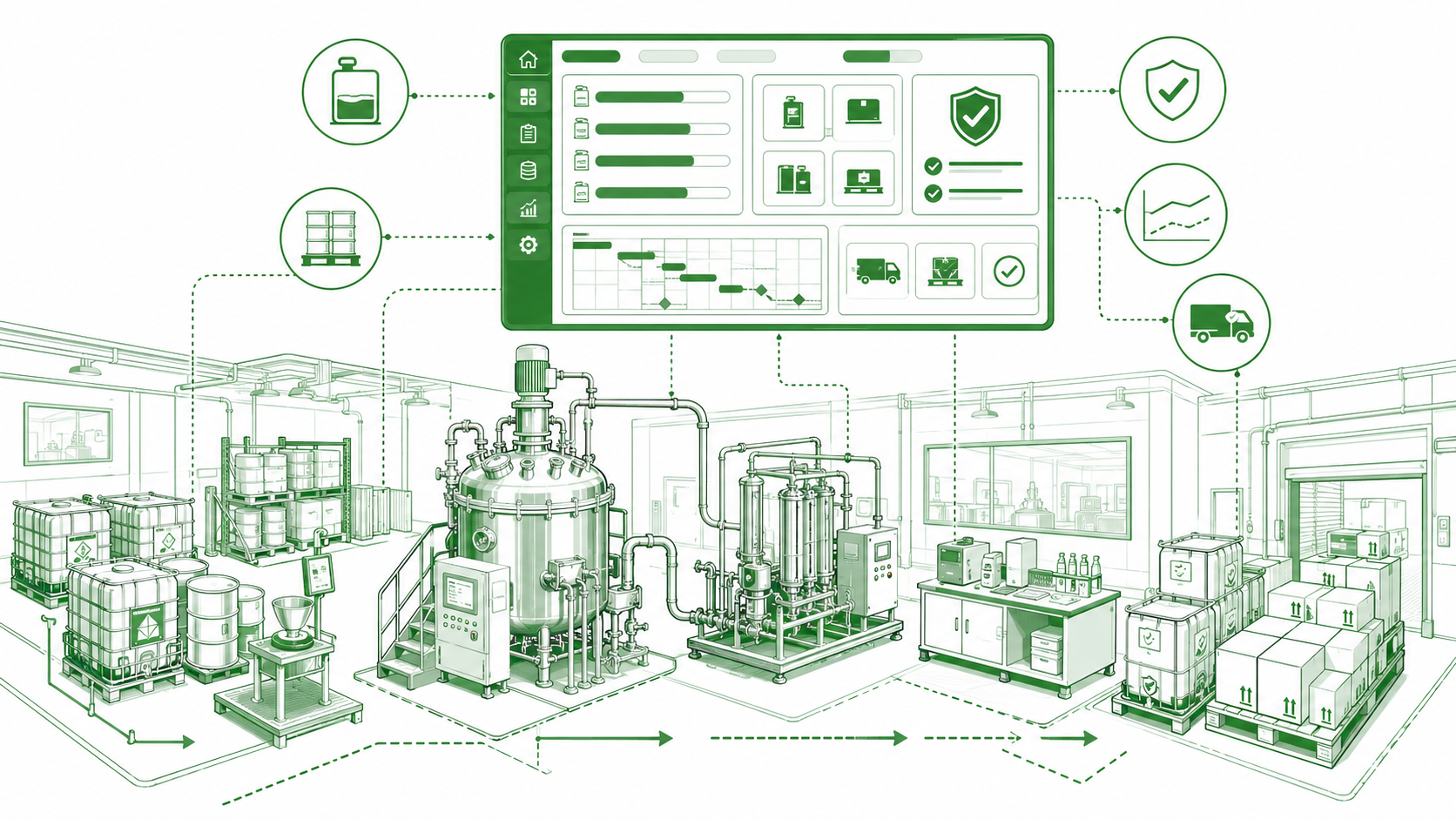
ERP software for the pharmaceutical industry can connect these operational areas and give teams a clearer view of production, materials, batches, quality and orders from one connected system.
The goal is not more data. It is faster access to the right information when a decision needs to be made.
Why Pharma Manufacturers Need Real-Time Visibility
A pharmaceutical plant is one connected operation.
A material shortage can delay a batch. A production delay can affect the schedule. A quality hold can prevent finished goods from moving forward. A dispatch delay can then affect customer commitments.
The problem becomes harder when teams depend on separate updates.
In pharma manufacturing, there is another layer of complexity.
Teams need to manage batch and lot traceability, QC holds and releases, expiry or retest dates, batch records and GMP-related information. A missing or delayed update can therefore affect more than production speed. It can also affect how confidently teams control the process.
Real-time visibility helps teams see what needs attention before a small information gap becomes a larger operational problem.
- Delayed production updates
- Manual inventory checks
- Different versions of production data
- Difficulty checking batch status
- Quality information reaching production late
- Material requirements not being visible early enough
- Reports that are already outdated when managers receive them
What Makes Real-Time Visibility Different in Pharmaceutical Manufacturing?
Real-time visibility in a pharma plant is not simply knowing whether a machine is running.
This makes batch traceability and quality control important parts of operational visibility.
The information also needs to be timely and accurate. A system showing yesterday's stock level or an old batch status cannot provide a reliable picture of the current operation.
- Which batch is being processed
- Which lot of material is being used
- Whether a batch is under testing or on hold
- Whether required raw materials are available
- Whether materials are within expiry or retest requirements
- Whether batch records are complete
- Whether a batch has been approved for the next stage
- Whether production is ahead or behind schedule
- Whether finished goods are ready for dispatch
Where ERP Fits in the Pharma Manufacturing Process
Think of the pharmaceutical operation as a connected flow:
Planning → Procurement → Stores & Inventory → Production → Quality → Finished Goods → Dispatch
Each stage depends on information from another stage.
Production needs to know whether materials are available. Procurement needs visibility of future requirements. Quality needs batch information and test status. Dispatch needs to know whether finished goods have been released.
Pharma ERP software can connect these information flows so different teams can work with a more consistent view of the operation.
It does not necessarily mean replacing every existing system. Instead, ERP can connect with other systems where required and help bring important business and manufacturing information together.
Production Tracking
Teams can compare planned and actual production, follow batch progress and identify delays earlier.
Batch Tracking and Traceability
Batch information can be connected with production and quality records, making it easier to understand where a batch is and what has happened to it.
This supports better batch traceability and reduces the need to reconstruct information manually.
Inventory Visibility
Teams can see stock levels, material consumption and availability against production requirements.
This helps identify possible shortages before production is ready to start.
Quality Status
Production teams can see whether a batch is waiting for testing, under quality review, approved or on hold.
This reduces unnecessary calls between production and quality teams.
Expiry and Retest Tracking
Where applicable, material information can include expiry or retest status, helping teams make better decisions about material availability and use.
Procurement Tracking
Procurement teams can connect material requirements with purchase-order information and expected deliveries.
Order and Dispatch Tracking
Managers can follow order progress and finished-goods readiness without waiting for separate updates from several departments.
This is where pharmaceutical ERP systems can become useful: they bring important operational information closer to the people who need to act on it.
One Connected View of the Pharma Plant
The value is not simply having all this information. The value comes from connecting it so teams can act on it faster.
- Production: Batch progress, output and delays. Helps identify schedule gaps.
- Inventory: Stock, consumption and availability. Helps prevent material surprises.
- Quality: Testing, holds and release status. Reduces waiting between functions.
- Procurement: Requirements and order status. Improves material planning.
- Batch Management: Batch stage and history. Supports traceability.
- Finished Goods: Release and availability status. Supports order planning.
- Dispatch: Order and delivery status. Improves coordination.
- Management: Planned vs. actual performance. Supports faster decisions.
Key Information and KPIs Pharma Plants Should Track
Real-time visibility becomes useful when the plant tracks information that supports daily decisions.
The exact KPI list should depend on the manufacturer's products, processes and operational priorities.
The key is data quality.
If production data is entered late, inventory is not updated correctly or quality status is missing, even a good system will provide an incomplete picture.
- Planned vs. actual production
- Production output
- Batch cycle time
- Material consumption
- Inventory levels
- Quality holds and rejections
- Production delays
- Order completion
- Dispatch status
- Material availability
- Batch status
- Production schedule adherence
How ERP Helps Different Pharma Teams
A connected system can give each team the information it needs without making everyone depend on the same manual report.
This is the practical value of ERP for pharma companies: better information flow between functions.
- Plant Heads can review production status, major delays and operational risks.
- Production Managers can monitor batch progress, production schedules and material availability.
- Quality Managers can follow testing, batch status, holds and releases.
- Stores and Inventory Teams can monitor stock, consumption and material requirements.
- Procurement Teams can track upcoming requirements and purchase orders.
- Supply Chain Teams can follow order progress and finished-goods readiness.
- Senior Management can review connected operational information instead of waiting for several reports to be combined.
ERP Does Not Fix the Process by Itself
This point is easy to miss.
ERP can show what is happening. It does not automatically explain why.
Suppose the system shows that a batch is two days behind schedule.
The system has helped identify the problem faster. The plant team still needs to investigate the cause.
That is why digitalisation should work alongside process discipline.
Accurate data + clear processes + useful technology = better operational visibility.
Technology should make good processes easier to manage, not hide weak processes behind a dashboard.
- A raw material shortage
- Equipment downtime
- A quality hold
- Manpower availability
- Poor production planning
- Documentation delays
- A process bottleneck
How to Choose ERP Software for the Pharmaceutical Industry
Choosing an ERP system should begin with the manufacturer's actual operating needs, not simply the number of features listed in a brochure.
The right ERP for the pharma industry should fit the manufacturer's current needs while leaving room for future growth.
- Check Batch and Traceability Requirements: Can the system support batch, lot and production-history requirements relevant to your operation?
- Evaluate Quality Workflows: Can teams see testing, quality status, holds and releases without relying on separate manual updates?
- Check Inventory Status: Can the system show material availability, consumption and requirements clearly?
- Review System Integrations: A pharma plant may already use MES, LIMS, WMS or other specialised systems. The ERP should be able to integrate with the systems that are important to the operation rather than assuming one system must do everything.
- Test Ease of Use: Will production, quality, stores and management teams actually use the system every day? A powerful system that people avoid using will not create useful visibility.
- Evaluate Reporting: Can managers quickly find the information they need for production and operational decisions?
- Consider Scalability: Can the system support additional products, production lines, locations, users or plants as the business grows?
How Gemba Concepts Can Help Pharma Manufacturers
Digitalisation should start with understanding how work actually happens.
Gemba Concepts studies the existing production and information flow, identifies gaps and helps define what information matters before technology is introduced or improved.
The approach is simple: See → Understand → Improve → Digitalize → Measure.
This can include mapping information flow, reviewing production processes, defining useful KPIs and identifying where teams lose time because information is delayed, incomplete or difficult to access.
The aim is to make technology support the operation not become another disconnected tool.
When Pharma Manufacturers Need External Support
External pharmaceutical consultants can add value when a plant knows it has visibility or process problems but cannot clearly identify where they begin.
Good pharma consultancy should begin with understanding the operation, not simply recommending software.
- Production updates are regularly delayed
- Different departments maintain different numbers
- Batch information is difficult to trace
- Teams depend heavily on spreadsheets
- Quality and production updates do not reach each other quickly
- Managers spend too much time collecting information
- Existing systems are not connected effectively
A Quick Real-Time Visibility Checklist
Ask your team:
If several answers are "not really," there may be a visibility gap worth investigating.
- Can managers see the current production status without making a call?
- Can stores confirm material availability quickly?
- Can batch status be checked without chasing several people?
- Can production see quality holds directly?
- Can procurement see upcoming material requirements?
- Can managers compare planned and actual production?
- Can teams identify production delays quickly?
- Are important decisions still dependent on disconnected spreadsheets?
Final Takeaway
A pharma plant cannot respond quickly to a problem it cannot see clearly.
ERP software for the pharmaceutical industry can connect production, inventory, quality, procurement, batches and dispatch into a more useful operational view.
But software alone is not the answer.
Reliable data, clear processes and disciplined execution matter just as much.
Remember the 3:40 PM batch.
The real advantage is not another dashboard.
It is knowing what is happening early enough to do something about it.
Get Real-Time Visibility Across Your Pharma Manufacturing Operations
See where information is delayed, disconnected or difficult to access, and where process improvement and digital visibility can help your teams make faster decisions.
Key Takeaways
- A pharma plant is one connected operation — a material shortage, a quality hold, or a delayed update in one area quietly delays everything downstream.
- Real-time visibility in pharma isn't just "is the machine running" — it's batch status, lot traceability, QC holds, and expiry/retest data, all current and accurate.
- ERP can show that a batch is two days behind schedule. It can't tell you why — that still takes process investigation.
- Choosing an ERP should start with the plant's actual operating needs — batch traceability, quality workflows, integrations — not a feature checklist.
Frequently asked questions
What is ERP software for the pharmaceutical industry?
It connects production, inventory, procurement, quality, batches and orders so teams can access important operational information more easily.
How does ERP help pharma manufacturing?
It gives teams connected information about production, materials, quality and orders, helping them make decisions faster.
What is real-time visibility in pharma manufacturing?
It means having timely access to current information about production, batches, inventory, quality, materials and orders.
How does ERP improve batch tracking?
It connects batch information with production and quality records, making batch status and history easier to follow.
Can ERP connect production and quality?
Yes. ERP can connect production information with quality workflows, including testing, holds and release status.
How does pharma ERP software help inventory management?
It connects inventory, material consumption and production requirements, helping teams identify availability issues earlier.
What should pharma manufacturers look for in an ERP system?
Look for batch traceability, quality workflows, inventory control, system integrations, ease of use, reporting and scalability.
Is ERP useful for growing pharma companies?
Yes. It can help growing manufacturers manage increasing production, inventory, batch and order information more effectively.
Related articles
Contact Gemba Concepts
Need Help Solving Similar Execution Gaps?
Connect with our consulting team to discuss your current operational challenge and the outcomes you want to achieve.
Bengaluru
Ram Leo, 59/4, Market Rd, Basavanagudi, Karnataka 560004
Ahmedabad
World Trade Tower, Near Sarkhej Sanand Cross Road, Gujarat 380051
Share This Article
Found this useful? Share it with your team and peers.