OEM Manufacturing: Services Drive 40% Profits by 2027
The era of “Sell and Forget” in Indian manufacturing is officially over.
For decades, the metric for success in the heavy engineering and capital goods sector was simple: How many units did you ship? But a silent revolution is happening in the P&L statements of India’s top OEMs.
While the factory floor is focused on shipping iron, the real value is migrating to what happens after the truck leaves the gate.
Our analysis of recent market data uncovers a divergence that many leaders are missing: The “Service” revenue stream is now compounding faster than the “Product” revenue stream (~1.2×). This isn’t just a variance; it is a fundamental shift in the business model of Indian manufacturing.
The Data: A Tale of Two Growth Rates
We analyzed the last 5 years of performance across key Indian industrial players. The numbers tell a clear story:
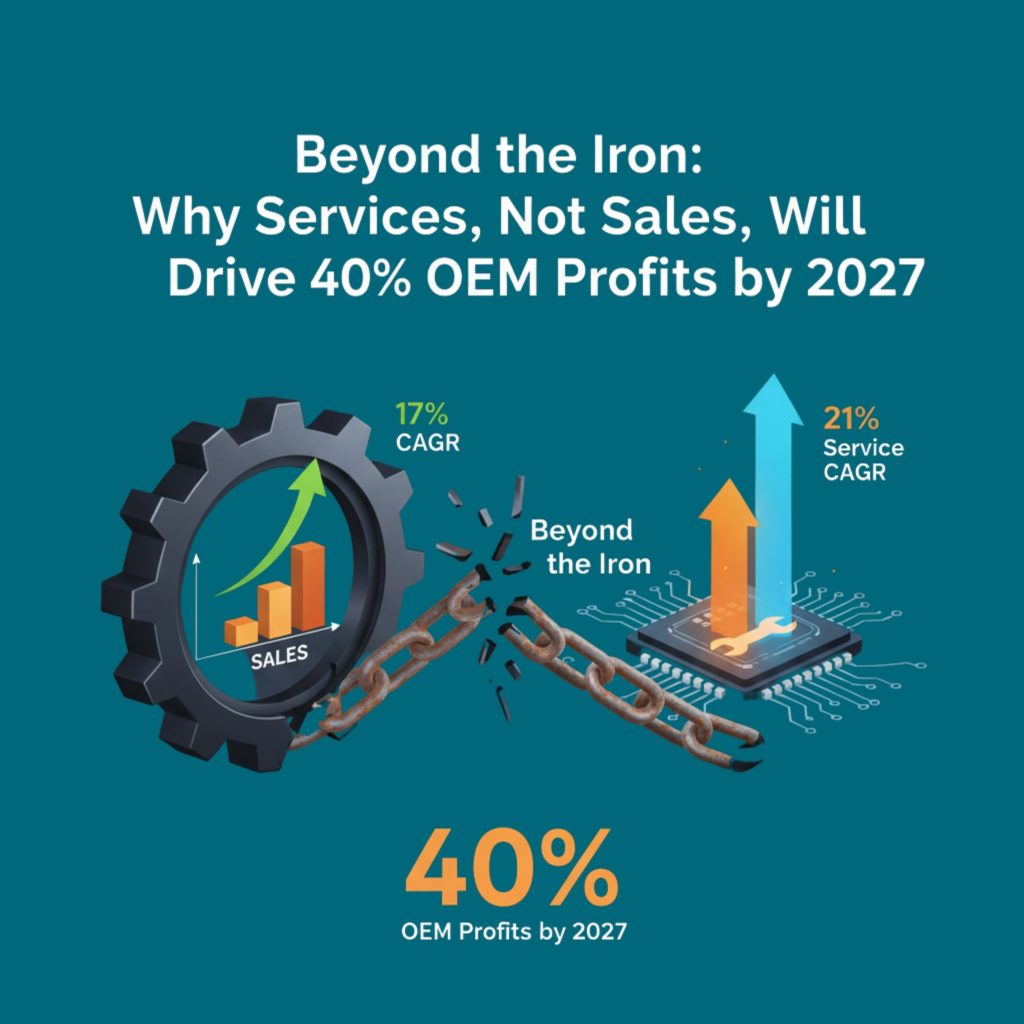
1) Product Sales (New Machines): Growing at a healthy 17% CAGR.
2) Service & Spares Sales: Sprinting ahead at 21% CAGR.
A 4% difference may look small on a spreadsheet, but in the world of compounding, it is seismic. It signals that the installed base is now generating value faster than new customer acquisition.
Based on aggregated FY20-25 P&L analysis of top Indian OEMs (heavy engineering & capital goods sector) — Gemba Concepts
The "Profit Flip": Why Revenue Share Misleads
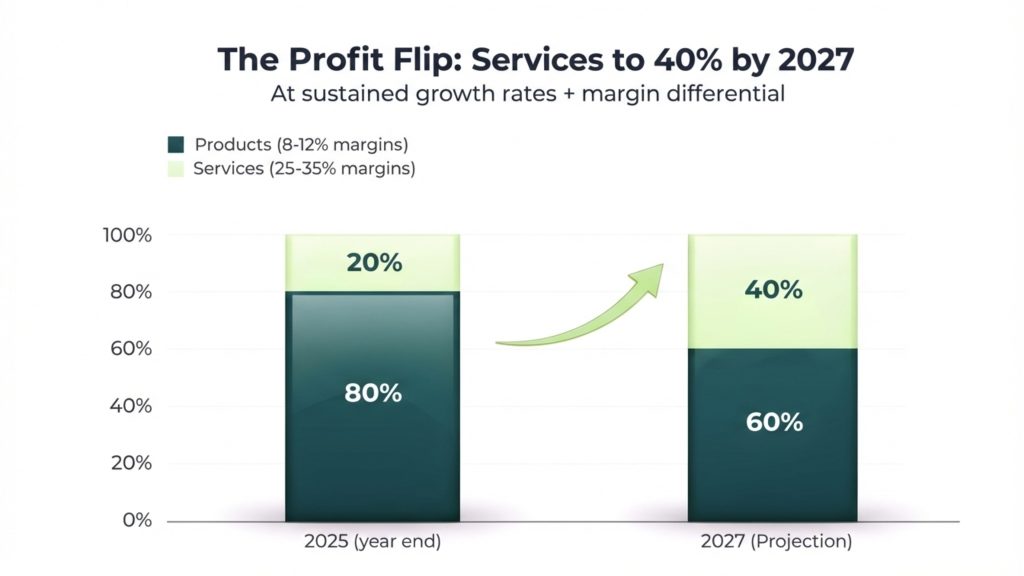
Sceptics will argue Service is just 15–20% of revenue. But in consulting, we don’t look at Top Line volume; we look at Bottom Line impact — Not all revenue is created equal.
1) The Hardware Rupee: High steel costs, logistics overheads, competitive pricing pressure. Net margins: ~8–12%.
2) The Service Rupee: Comes with intellectual property, recurring contracts, and high barriers to entry. Net Margins: ~25-35%.
The Projection:
If these growth rates (17% vs 21%) sustain, our models predict a “Profit Flip.” By 2027, the Service division—Maintenance-as-a-Service (MaaS)—traditionally viewed as a “support function”—is projected to contribute ~40% of total enterprise profit for top-tier OEMs.
The company that sells the machine will soon make less profit than the division that keeps it running.
The Shift: From "Break-Fix" to "Servitization"
This financial shift is driving a strategic transformation known as Servitization.
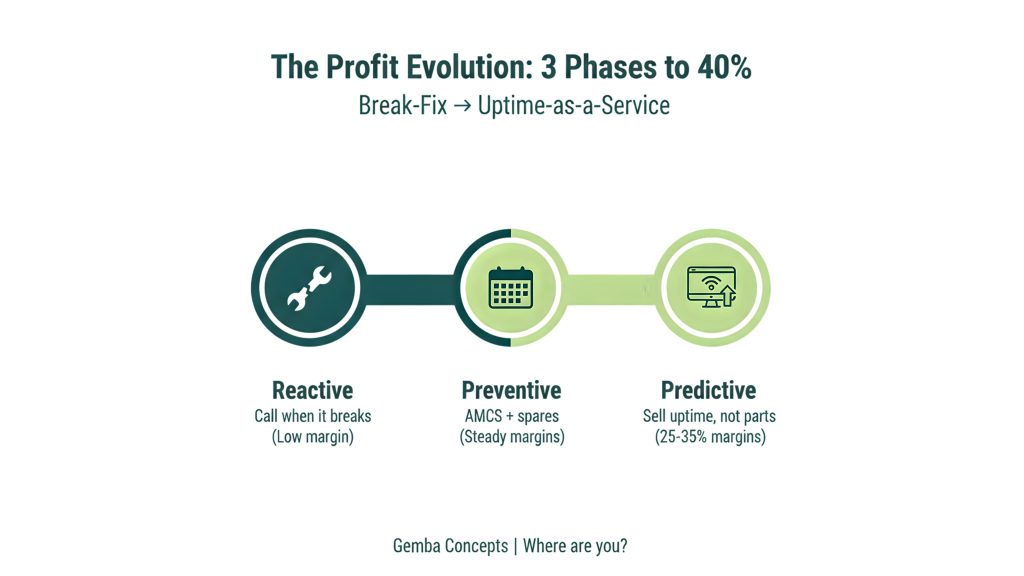
We are seeing Indian market leaders move through three distinct phases:
1) Reactive (The Past): “Call us when it breaks.” (Low margin, unpredictable).
2) Preventive (The Present): Annual Maintenance Contracts (AMCs) and spare part sales. (Steady margin).
3) Predictive “Servitization” (The Future): Selling uptime, not parts.
In this new model, OEMs don’t just sell an air compressor; they sell “compressed air as a service.” They don’t sell a CNC machine; they sell “guaranteed spindle hours.”
The Strategic Imperative for 2026
For CEOs and Operations Leaders, this data presents three urgent priorities:
1) Stop treating Service as a Cost Center: If your After-Sales team reports to Quality or Sales, you are structured for the past. Service requires its own P&L and growth targets.
2) Digitize the Installed Base: You cannot sell “Uptime” if you cannot measure it. IoT isn’t a buzzword anymore; it is the billing meter for your future revenue.
3) Reprice the Value: Are you pricing your AMCs based on technician man-hours (cost-plus) or based on avoided downtime (value-based)? The gap between the two is pure profit.
The Bottom Line
The Indian manufacturing success story of the next decade won’t be written by who builds the best machines. It will be written by who builds the best lifecycle for those machines.
The 40% profit opportunity is there. Is your organization ready to capture it?
By— Ayush Kumar (Lean Consultant)