Gemba Concepts
Map Your Batch Turnaround Time

Your production line is ready. What's holding the next batch?

Not every hour between batches is waste. Cleaning, drying, clearance and documentation are required and should stay. The opportunity is the waiting around them.

This does not assess regulatory compliance. It looks at operating time around the controls you already run.

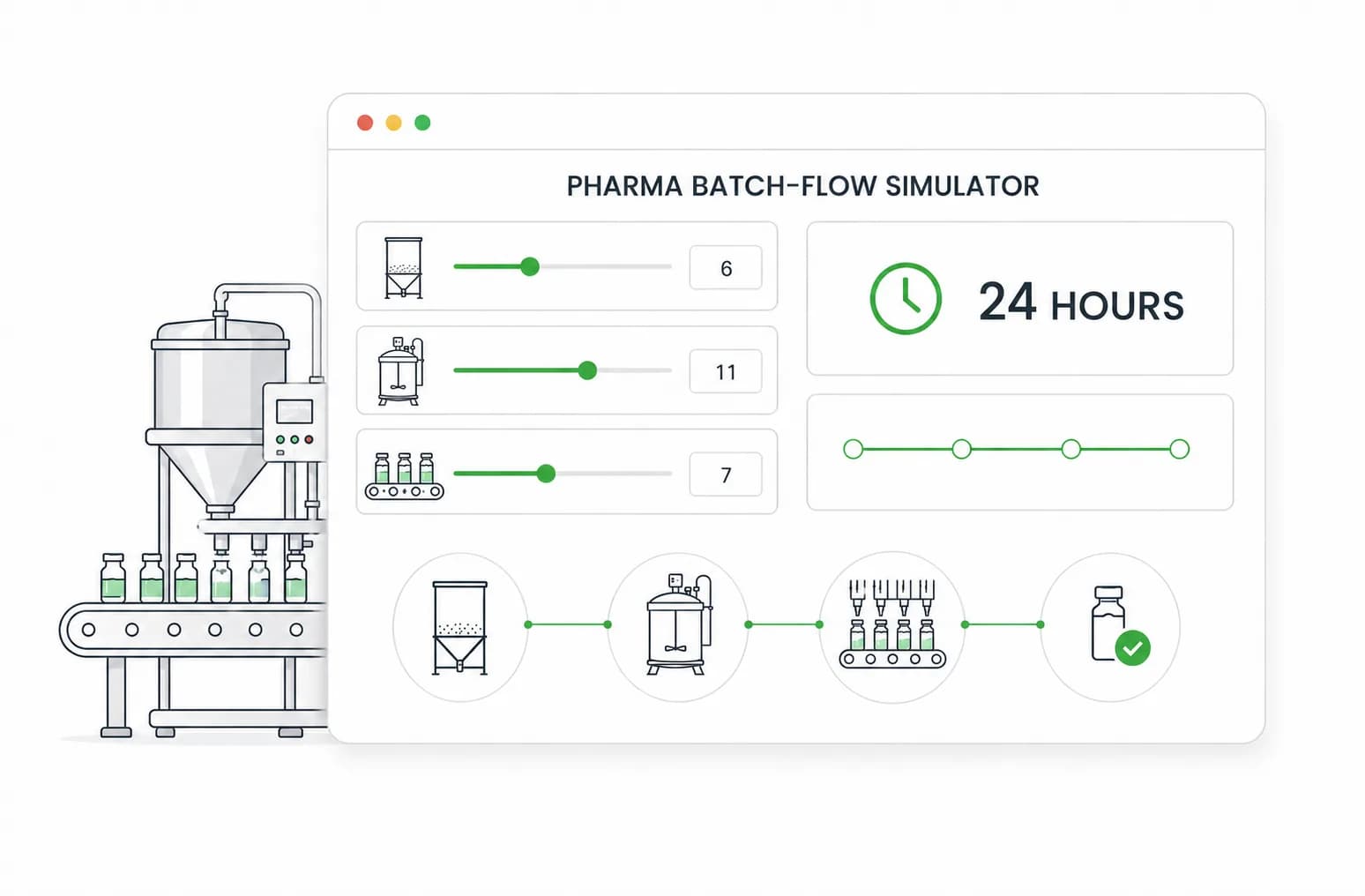
Pharma batch-flow simulator preview — production line illustration with the simulator's sliders, hours counter, and stage tracker

Two Routes In

Start with the split.

How much of your turnaround is required, and how much is waiting?

Interactive · Three Minutes

The Pharmaceutical Batch Flow Simulator

Follow one batch the way it actually moves — raw material receipt, QC testing, storage, dispensing, manufacturing, in-process checks, filling, packaging, final QC, QA release, dispatch.

Sample batch gap18.5 hrs
RequiredClassified waitingUnclassified

Enter the waiting time at six points along that chain. The tool shows you:

  • The overall delay and where for that batch
  • Waiting hours built up across a month
  • An indicative figure for the value held while it waits
  • The stage holding the batch up the most

The processing time is not the question. The waiting between controlled steps is.

Quick unlock. Name, work email, company.

Free Download

The 10-Batch Time-Loss Tracker

Follow ten batches the way your own team records them — batch completion, changeover, line clearance, materials ready, documentation, review, and then the next productive start.

Tracker Preview

Batch 1 — changeoverLogged
Batch 2 — QA clearanceLogged
Batch 3 — material stagingPending

Record the actual timestamps as they happen on the floor. The kit gives you:

  • Everyone measures against one baseline
  • Ten record sheets for your next batches
  • A summary page that totals the time by each category
  • A printable format ready for the shop floor

The evidence comes from your own plant floor, not from an industry average.

Quick unlock. Name, work email, company.

The Pattern Most Plants Share

You will recognise at least four of these.

None of these are failures. Each is a normal day that quietly adds time around work that has to happen anyway.

Planning

The plan changes after it is released, and not everybody sees the new one at the same time.

Stores

The material is in the plant. Whether it is available, under test, released or blocked is not clear at the line.

Production

Planned turnaround and actual turnaround are two different numbers. Neither is wrong.

Quality & production

Clearance takes what it takes. The waiting comes from the next team hearing about it late.

Quality & production

The record is required. Some of the waiting around it is not.

Plant

One breakdown moves four batches, and agreeing the recovery takes longer than the repair.

Across a month, the waiting alone often runs into several production days — on batches where nothing went wrong.

What a review actually is

  • One product family, chosen with your plant head

  • Full turnarounds followed on the floor, not from a report
  • Time split into required and waiting, with a reason and an owner against each
  • Three changes agreed with your team, each with a name and a date

We do not touch what your quality system must check. Only the waiting around it.

A machine constraint may justify another line. A flow constraint will not be fixed by one.
The costly mistake is confusing the two.

Book It

Find the split before it becomes a capex note.

Tell us the plant and one product family. We will come back with a time and the two or three things worth looking at first.

The run tells you how the line performed.
The gap tells you how the plant performed.

Email UsWhatsApp